 Cuesta Pest Control CorporationCuesta Pest Control Corporation
Find the entry point. Stop the pest.
Pest control service Hialeah homeowners keep on speed dial handles four calls over and over: German roaches on the kitchen counter at night, ant trails across the patio slab after an afternoon storm, droppings under the sink, and termite swarmers stuck to a windowsill. Every visit starts the same way — walk the property, find where the pest is getting in and what is feeding it, then treat. You get the same person each time, in English or Spanish, and a plain explanation of what was applied and where before the truck leaves.
Call (239) 456-8046
Text or call about your pest control service job — a quick photo helps us quote fast.
A firm, all-in price confirmed before we start — no surprises.
On time, done to standard, and tidy when we leave.
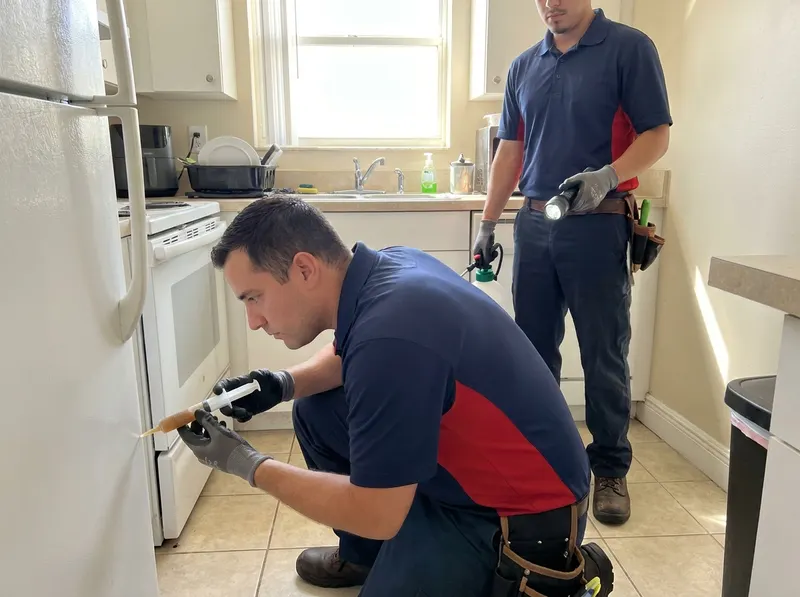
German roach work in Hialeah is kitchen-and-bath work: gel bait placed inside hinge voids and cabinet corners, growth regulator so the next generation cannot mature, and a crack-and-crevice application along the toe kick, behind the range and under the sink where the water line enters the wall. Older CBS block duplexes and 1950s–70s single-family homes around East Hialeah and the Bucky Dent Park area give roaches a warm block wall, a slab-level plumbing penetration and a shared wall with the unit next door — which is why one spray never holds. Expect an initial visit and a follow-up two to three weeks later, because bait has to reach the egg cases that hatch after visit one. You get told exactly which product went where, and no baseboard fogging of the whole house for show.
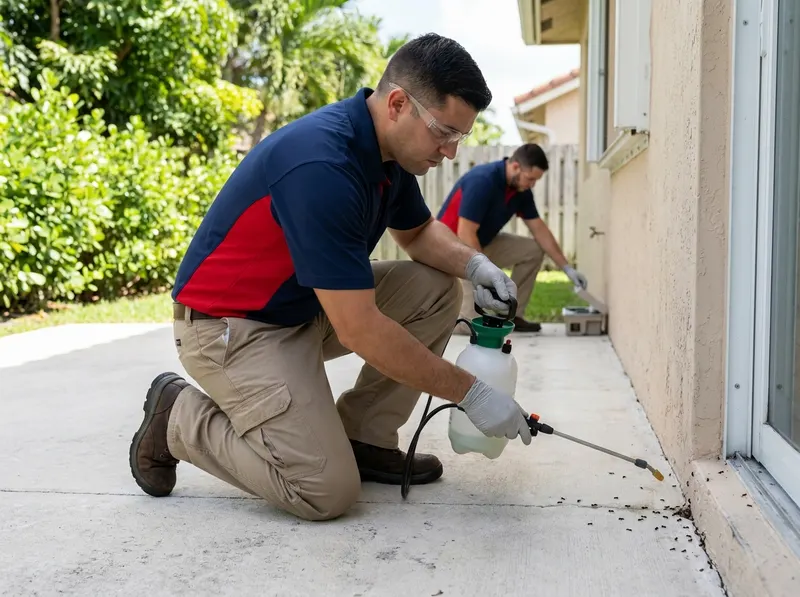
Ant control here means identifying the species before anything is applied, because ghost ants, white-footed ants, big-headed ants and carpenter ants each answer to a different treatment. Non-repellent perimeter product plus liquid or granular bait is the standard combination, worked along the patio slab seam, the driveway expansion joint, irrigation heads, and any hedge or tree limb touching the roof edge — a branch on the fascia is a bridge, and cutting it does more than any spray. Ant calls in West Hialeah and Palm Springs spike within a day or two of an afternoon rainstorm, when nests under the slab get flooded and the colony moves indoors. Trailing ants across a kitchen counter matters most in homes with small children, so placements go in voids and cracks, not on open surfaces.
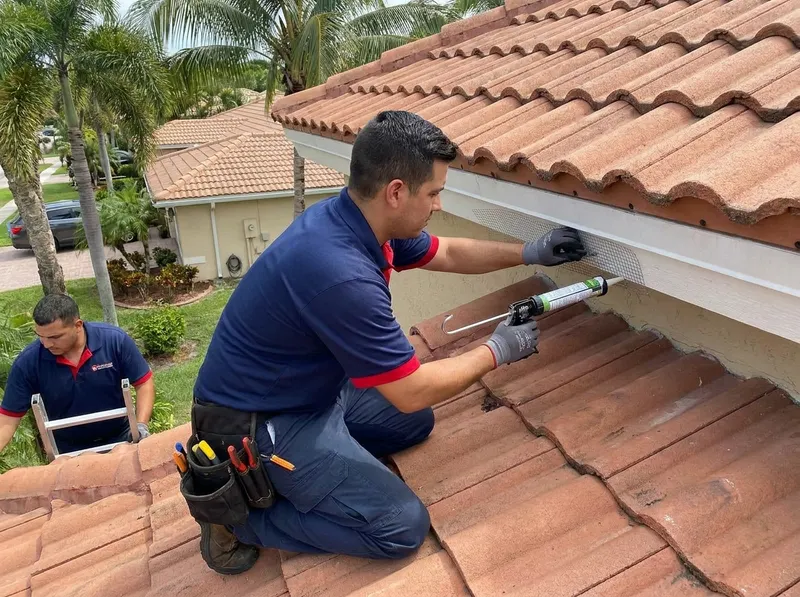
Rodent control starts in the attic and on the roof, not with a bait box by the front door. Roof rats in Hialeah travel utility lines and ficus canopy, then enter at soffit returns, loose barrel-tile edges, gable vents and the sleeve where the A/C refrigerant line and condensate drain pass through the wall. The visit includes a full inspection for droppings, rub marks and gnawed insulation, snap-trap placement in the runs, tamper-resistant exterior stations where children or pets are present, and a written list of every gap found with a photo. Rodent pressure climbs November through February when cooler, drier nights push rats indoors, so early fall is the easiest time to book attic work. Trapping drops the population; sealing is what keeps it down.
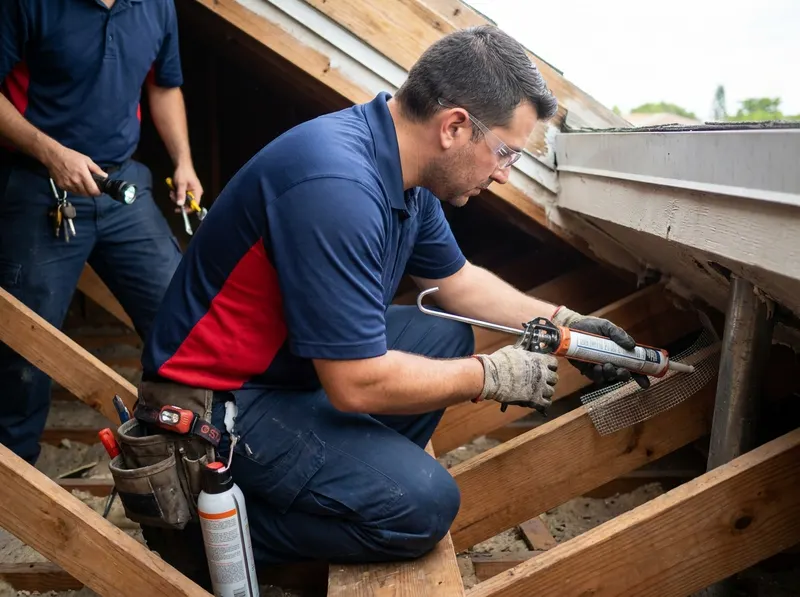
Exclusion is the physical repair side of rodent work: hardware cloth over soffit returns and gable vents, sealing around A/C line sets and plumbing penetrations, closing roof-to-wall seams and garage door corner gaps, and screening weep holes and dryer vents. A rat needs an opening about the size of a quarter and a mouse about a dime, which is why a house can look sealed and still be open in six places. This service matters most on Hialeah's flat and low-slope roofs with long soffit runs and on duplexes where a neighbor's untreated unit shares the roof line — you can seal your side and cut the traffic through it. Exclusion is quoted by the number and difficulty of openings, and every one gets shown to you before it is closed.
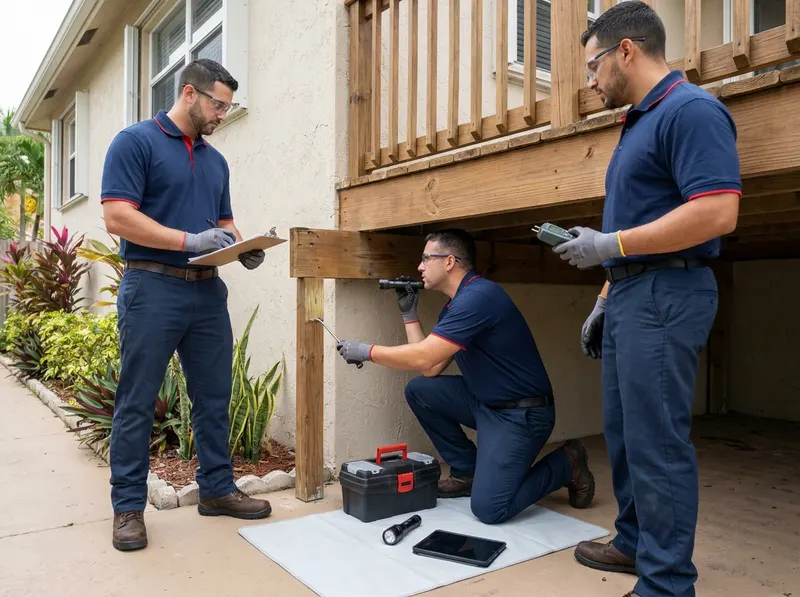
A wood-destroying organism inspection is the paperwork job: a documented inspection of accessible areas — baseboards, window and door frames, attic framing, garage, exterior siding and any wood-to-ground contact — with findings written up for a real estate closing, a refinance or your own peace of mind. WDO requests in Hialeah cluster in spring and summer alongside closing season, and lead times stretch to several days in those months, so book with room to spare. The inspection tells you whether what you found on the windowsill was a subterranean swarmer, a drywood swarmer or a flying ant, because the three lead to three different bills. No treatment is bundled into an inspection — if the report is clean, you pay for the report and that is the end of it.
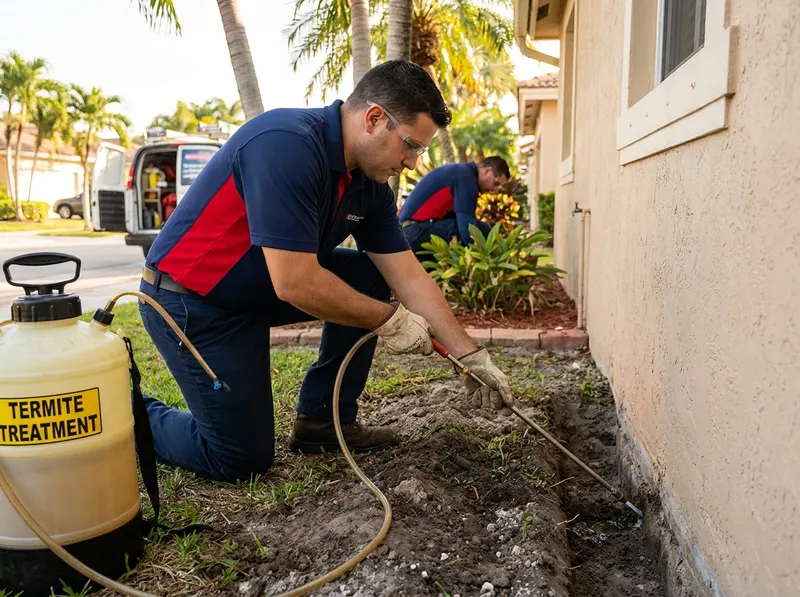
Subterranean termites reach Hialeah homes from the soil, and the giveaways are mud tubes on a block wall, sagging or blistered baseboard, and swarmers at a window in late winter or spring. Treatment works the soil and slab side of the structure: a liquid termiticide barrier along the foundation, drilling and treating slab penetrations, plus in-ground bait stations where a trench is not practical because of pavers, a pool deck or a driveway pour. South Florida's high water table and afternoon rain keep soil moisture and colony pressure high year-round, and Formosan subterranean colonies in the county are large enough that finding the entry into the structure matters more than volume of chemical. Swarm season runs hardest February through May, so January and February inspections beat the rush.
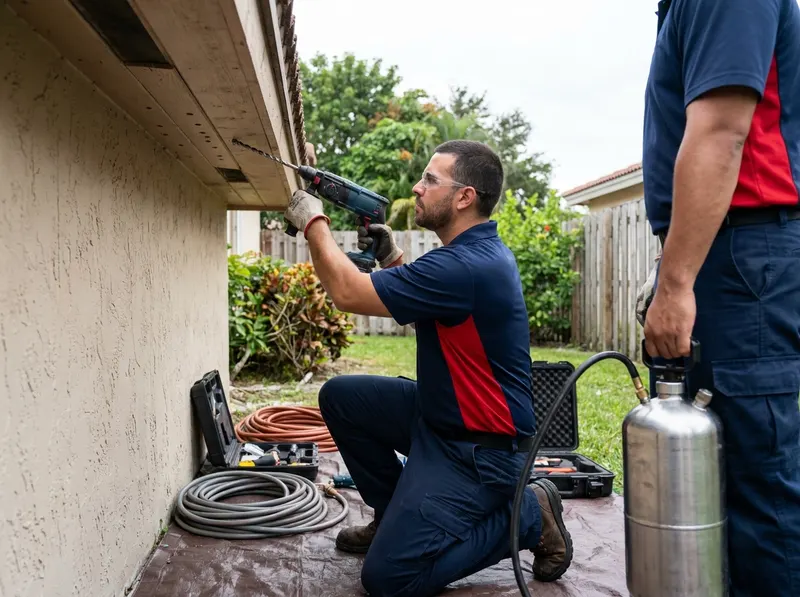
Drywood termites live inside the wood itself with no soil connection, so the signs are different: small piles of hard six-sided pellets on a windowsill or floor, tiny kick-out holes, and hollow-sounding trim. Where the infestation is localized — a door frame, a section of fascia, an attic rafter, a piece of furniture — targeted local treatment by drilling and injecting the galleries can resolve it without tenting. Where activity shows up in several unconnected areas of the structure, whole-structure fumigation is the honest recommendation, and that is a specialty tent job I will tell you about plainly rather than sell you three local treatments that will not reach it. Older wood-frame additions and enclosed porches on Hialeah homes are the usual spots to check first.
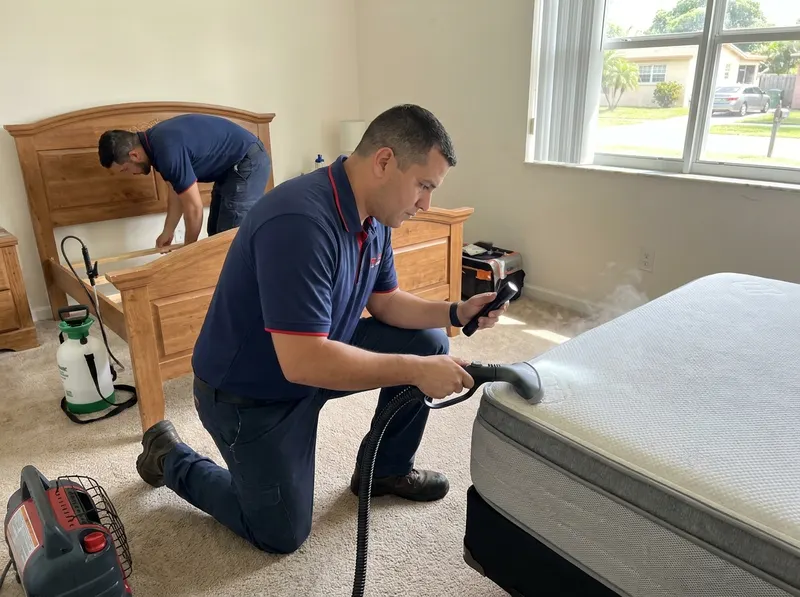
Bed bug treatment is inspection-heavy: mattress seams, box spring corners, headboard bolts, sofa piping, baseboard edges and behind wall outlets and hanging picture frames, because a bug two feet from where you sleep is the whole problem. Treatment combines a residual application in harborage points, crack-and-crevice work, and encasements or steam where appropriate, with a mandatory follow-up because eggs hatch on their own clock. Bed bug calls stay steady all year in Hialeah's multi-family and duplex housing, and same-week appointments are easiest to get January through March. You will get a written prep list before the visit — laundry on high heat, bagging, clearing closet floors — because prep does about a third of the work and skipping it is the main reason treatments fail.
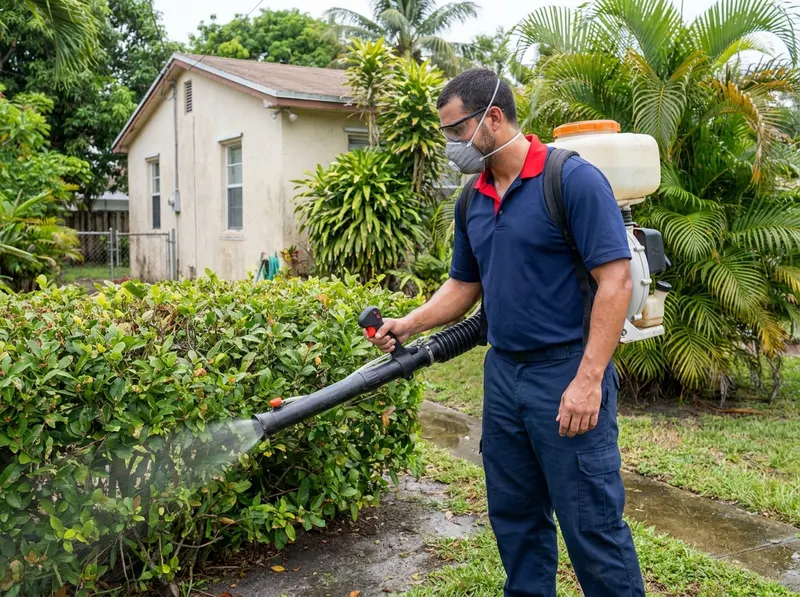
Mosquito service in Hialeah is one part treatment and one part water removal. The barrier application goes on the shaded resting spots — the underside of hedges, fence-line vegetation, bromeliads, the shaded face of the patio slab and under raised decks — while the walk-through finds the breeding water: plant saucers, tarps, buckets, uncovered pool pump pits, clogged gutters, boat covers and canal-edge low spots. Yards near the Miami Canal, the lakes at Amelia Earhart Park and the shaded blocks around Country Club of Miami take heavier pressure from May through October, and activity climbs within days of each afternoon storm. Choose a single knockdown before a backyard party or monthly service through the rainy season — either one is suppression, and honest suppression beats a promise no one can keep.
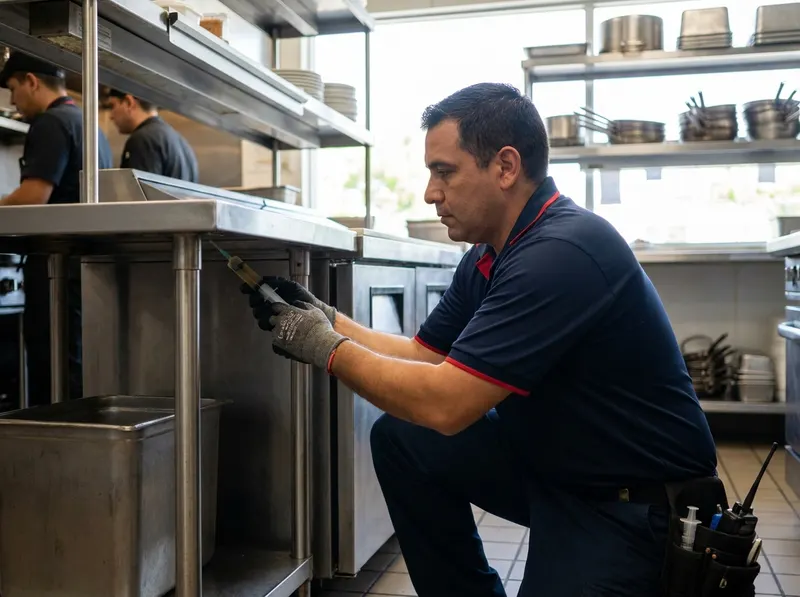
Commercial service is built for small food and retail operators — cafeterias, bakeries, panaderías, cafeterías, markets, salons and small offices — with early-morning or after-close visits so nothing happens in front of customers. The routine covers a documented sanitation and harborage walk-through, drain and floor-sink treatment for small flies, roach work in equipment voids and under prep lines, exterior rodent stations, and service records kept on site for inspection. Businesses along the Westland Mall corridor, near Hialeah Market Tri-Rail Station and around Miami Dade College Hialeah Campus deal with shared alley dumpsters and constant back-door traffic, so the pressure is external and the schedule has to be regular, not reactive. Same person each visit, so nobody has to re-explain the building to a new tech every month.
The right plan depends on what you are fighting, not on which package sounds biggest. If you have one problem in one place — a wasp nest over the carport, ants in a single bathroom, a first roach sighting after a neighbor's unit was treated — choose a one-time targeted treatment. It runs the least money, usually $250 to $400, and for an isolated pest with a clear source it often ends the matter. If the pest is already established — German roaches in more than one room, a rodent you hear in the ceiling at night, ants that come back three weeks after every spray — choose an initial treatment plus a follow-up, then a recurring schedule. A German roach population needs the follow-up because bait and growth regulator work on the eggs hatching after visit one, and one spray cannot reach eggs. The trade-off is honest: recurring service costs more over a year than a single call, but a single call on an established infestation is the money most Hialeah homeowners tell me they already wasted twice. For rodents, the choice is treatment versus exclusion. If you want the fastest drop in activity, trapping and baiting alone will do it in one to two weeks. If you want the rats to stop coming back, choose exclusion — sealing soffit gaps, roof-line seams and the A/C line and plumbing penetrations they actually use — done alongside the trapping. Exclusion adds cost and a second visit, and it is the only part that changes the outcome next November when the nights cool off and roof rats start looking for attics again. For termites, the fork is inspection versus treatment. If you are buying, selling or refinancing, you need a WDO inspection report, not a chemical job. If you found swarmers or mud tubes, you need treatment, and the type of termite decides which: subterranean colonies are handled from the soil and slab side, drywood colonies are handled where the wood is, and a whole-structure fumigation is a separate specialty job with a tent crew. Ask, and you will get a straight answer on which of the three your situation actually calls for — including when the answer is that you do not need me yet. For mosquitoes and yard pests, decide by how you use the outside. If you only need a backyard usable for one afternoon — a quinceañera, a christening, a birthday under the canopy — a single knockdown treatment before the event fits. If you sit outside most evenings from May to October, a monthly barrier treatment on the shaded harborage — fence lines, croton and ficus hedges, bromeliads, the underside of the patio slab overhang — holds pressure down far better. The trade-off is that mosquito work is suppression, not elimination; standing water in a neighbor's bromeliads or an uncovered pool pump pit will keep feeding them, and I will tell you that on the walk-through instead of selling you a fourth visit.
| Service call | Upfront quote |
Your exact price is confirmed before any work begins.